
Education: Method Is Neither Pedagogy Nor Technique
Or, as the cool kids would have it: Method ≠ Pedagogy ∨ Technique. Come for the Jaques Ellul quotes, stay for the Anselm of Canterbury quotes.

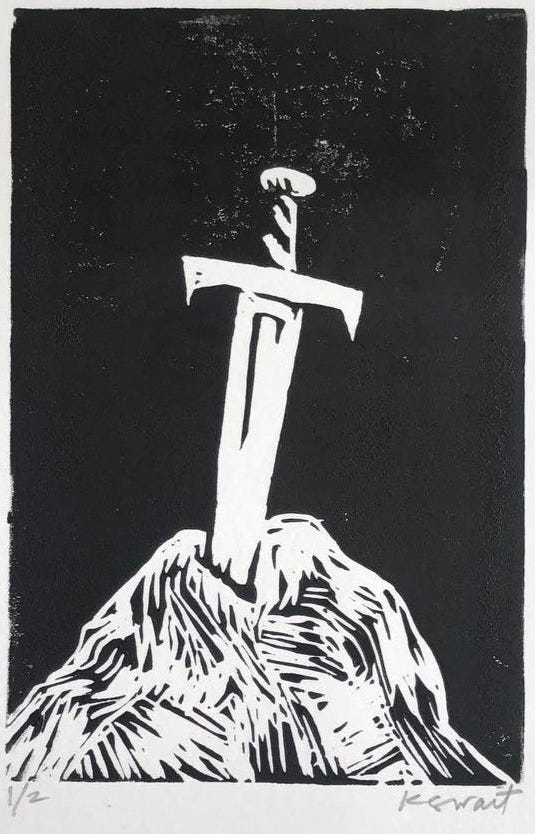

Down with psychopedagogy and its demonic friends.
A student upon reading Paul’s letter to the Colossians:
Tell me, master, what Saint Paul meant here. Why am I to turn away from earth, water, air, and fire? Why am I to turn away from moons and shrines? Are they evil? What are the things above? What is hid away with Christ in God, and how is it my life? Should I read my Bible? Should I read Aristotle? Did Plato study Moses? Does it matter? Should I study calculus? Does the infinitude of prime numbers mean anything at all? How shall I then live?
Down with psychopedagogy and its demonic friends.
Our concept of education ought to be much broader than that. Education is not merely intellectual, nor is it merely behavioral conditioning. It is inescapably moral, and bestowed in example as much as in conversation. To raise your child is to educate him. Potty training and table manners are education, as is instructing your children to rise or not when mother enters the room. Education is instructing our children in two things as we seek to disciple them in the Lord: first, in why we live, and second, in how we live to that end. It is utterly teleological, therefore, and utterly methodological; it is ends and means. Education is having the courage to thoroughly and earnestly answer a child, as he believes on the Gospel and begins to understand what he is here for, the question of how then shall we live?
There are many good methodologies available to us, but, importantly, none of them is a lesson plan with detailed notes for the instructor.
Now, in saying that education is utterly methodological, I do not want to suggest that one particular method or a single pedagogy is being endorsed. There is good teaching and bad teaching, of course, and that is not independent of method. Method matters. But like most of the good things God has given us, there is a horn of plenty available to us. There are many good methodologies available to us, but, importantly, none of them is a lesson plan with detailed notes for the instructor.
When, by the way, did we stop saying teacher in favor of instructor? How ugly, but how appropriate for our age, in which we see ourselves merely as machines. Perhaps soon our former masters (magistri), having transitioned through being teachers and then instructors, will finally arrive at the end our society has been working toward and become programmers. Then all our Johnnies and Janes will be properly conditioned and responsive.
The machinification of humanity and society, of individuals, has led to the proliferation of technique in every field of endeavor, over and against love and wisdom. Our world’s highest conception of man is as a worker or a citizen, so education naturally becomes about efficiency and compliance. Nobility and virtue are replaced with technique, and technique is for technology. Technique is dangerous when used on people, it is dehumanizing.
In his 1954 book The Technological Society, Jacques Ellul unveils the awfulness of the proliferation and ever-growing dominance of technique in society. He dedicates plenty of ink to the question of education. In the section below, he interacts with a 1951 speech given by Maria Montessori (yes, that Montessori) to UNESCO, in which she promoted the use of the technique of psychopedagogy among “all men on earth”, in order to secure a practical world peace. Ellul writes:
We note first of all that this technique must be implemented by the state, which alone has the means and the breadth to carry it through. But the rigorous application of the psychopedagogic technique means the end of private instruction— and therefore of a traditional freedom.
Second, this technique is “pantocrator.”1 It must be exercised over all men. If one man is left who is not trained according to its methods, there is the danger of his becoming a new Hitler. The technique cannot be effected unless all children are obliged to participate and all parents to co-operate. There can be no exceptions.
If only a minority are educated to comply, this technique can resolve none of the problems it is intended to meet. Mme Montessori’s statement is therefore neither a metaphor nor an exaggeration; all human beings, without exception, must be reached. We note again the aggressive character of technique. Mme Montessori emphasizes the fact that “it is necessary to free the child from the slavery of school and family” for him to enter the cycle of freedom proper to this technique. However, this freedom consists in a profound and detailed surveillance of the child’s activities, a complete shaping of his spiritual life, and a precise regulation of his time with a stop watch; in short, in habituating him to a joyful serfdom. The most important aspect of this technique is the forced orientation toward it. It is a social force directed toward a social end.
The education of the child, however, is not directed toward some merely abstract social end…The good of humanity, for example, is not the obscure notion the philosophers pretend it to be.2
Ellul says that this pantocrator technique of Montessori’s has its methods, which is an interesting thing to consider, since most people would likely make techniques aspects of a method3, e.g. chopsticks as the method of eating, and various finger-grips as techniques for implementing that method. However, Ellul is using an ample and elevated definition for technique:
The term technique, as I use it, does not mean machines, technology, or this or that procedure for attaining an end. In our technological society, technique is the totality of methods rationally arrived at and having absolute efficiency (for a given stage of development) in every field of human activity.4
In this way of thinking, which is also my own, technique takes on a sinister meta character. In our technological society, technique is above human activity and method. The word method has therefore taken on a technical meaning.
In saying that education is methodological, I am not claiming that education is technical. In fact, I would like to restore technique to its former low but necessary state, not as undesirable, but as desirable where it belongs, which is to say, at the fingertips. Technique should be used in final expression rather than as a motivator or meta tool. Method ought to be higher, which is precisely where it used to be.
In saying that education is methodological, I am not claiming that education is technical.
The Greek word μέθοδος (methodos) was used to speak of pursuit, especially the pursuit of knowledge. It is a combination of two words, meta and hodos, that combine into “following the way”, or even “the transcendent way”. Method is meta. So I mean it when I say that I do not endorse the techniques of a particular pedagogy. I do not even recommend one method as supreme. Instead, I insist that method matters because it is the way you educate. Your method must be wise.
Education is instruction in both the why and the how of life. Answering the why sets you in the right direction, and the how decides the vehicles and navigation. The former is of primary importance, of course, but the latter will decide how far you and your disciples get. One seems to always get farther on the high roads.
What is the why? For what are men made? What is the chief end of man? Man’s chief end is to glorify God, and enjoy him forever. “For of him, and through him, and to him, are all things: to whom be glory for ever (Rom. 11:36).” “Whom have I in heaven but thee? And there is none upon earth that I desire beside thee (Ps. 73:25).”
According to Scripture, we were made in the image of God, and for his and our mutual pleasure in communion. In order to be truly ourselves, as our Creator would have us be, we must become like him (Rom. 8:29, Eph. 4:13-15, 1 John 3:2). We cannot be content unless we are moving toward him, and even then, a holy impatience may come over us, and it did the apostle Paul. As Augustine of Hippo put it in the opening lines of his Confession, “Thou hast formed us for Thyself, and our hearts are restless till they find rest in Thee. Lord, teach me to know and understand which of these should be first, to call on Thee, or to praise Thee; and likewise to know Thee, or to call upon Thee.”
I have already compared education to discipleship, as we instruct and model the why and how to those under our authority. Now we begin to see that education is also a part of our sanctification, of our progression in holiness as we grow closer to Christ. The idea of education has, until very recently, always included the idea of movement. To educe (yes, that’s an English word) is to direct the course of something, usually by leading it out. For Christians, there is only one direction toward which we should pull those we have been given authority over: Godward. Education is sanctification, and the greatest thing we can teach is the love of God, which moves us toward him. This is one of the reasons our own educations never end.
Method ought to suggest pursuit. It should be the walking of a way. And we know something of the way.
O Lord, how greatly those blessed ones of thine shall rejoice. Doubtless they shall rejoice according as they shall love; and they shall love according as they shall know. How far they will know thee, Lord, then! And how much they will love thee! Truly, eye hath not seen, nor ear heard, neither has it entered into the heart of man in this life, how far they shall know thee, and how much they shall love thee in that life.
I pray, O God, to know thee, to love thee, that I may rejoice in thee. And if I cannot attain to full joy in this life may I at least advance from day to day, until that joy shall come to the full. Let the knowledge of thee advance in me here, and there be made full. Let the love of thee increase, and there let it be full, that here my joy may be great in hope, and there full in truth…
Meanwhile, let my mind meditate upon it; let my tongue speak of it. Let my heart love it; let my mouth talk of it. Let my soul hunger for it; let my flesh thirst for it; let my whole being desire it, until I enter into thy joy, O Lord, who art the Three and the One God, blessed forever and ever.5
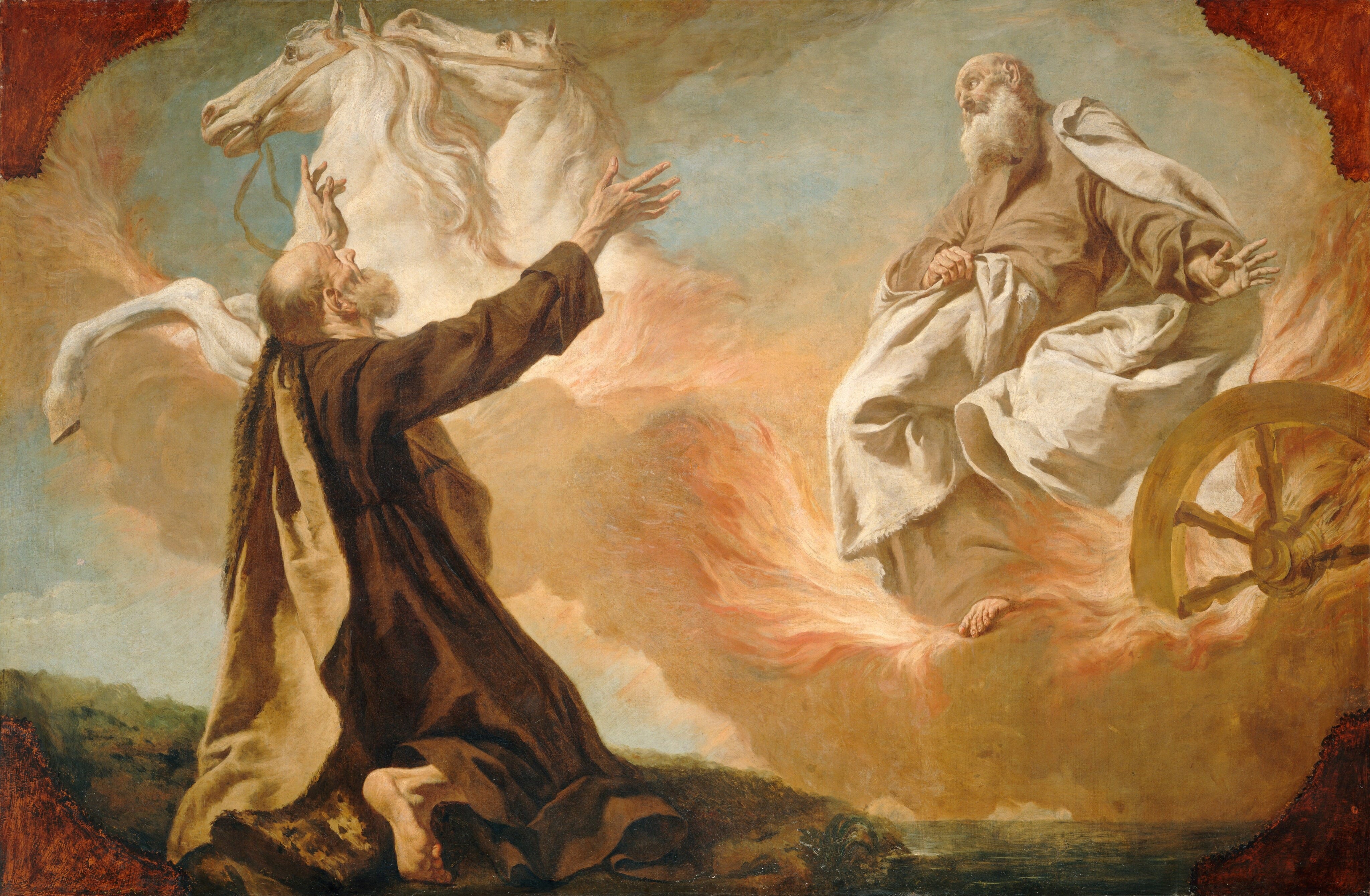
Method in education, in teaching, must be a method of discipleship. We do not undertake this pursuit of love alone, a point which deserves further exposition, but alas, not here. Here endeth the lesson, as some of your poets have said. I leave a painting of Elijah and Elisha below to inspire us both. Perhaps it will inspire me also to write a Part 2, which would be a double portion, if you will.
Peace be upon you.
Check out my shop, including audiobooks.
Ellul’s note: Pantocrator— a Greek word signifying “omnipotent.’‘ It was an epithet applied to Yahweh, Lord of Hosts, and to the Byzantine emperors.
Ellul, Jacques. The Technological Society, pp. 346-347. Translated by John Wilkinson, Alfred A. Knopf, 1964. Italics mine.
This should be correct, as the reader will soon see.
Ibid., from Note to Reader, p. xxv.
Anselm of Canterbury, Proslogium, ch. 26. Translated by Sidney Norton Deane.
Excellent and beneficial, Joffre. As per usual.
As I read through my Student Evaluations for the past semester (a chore, not by choice), once again I was grieved and angered by the amount of work students will apply to not learning. While not dominant, the sentiment of "why do I have to learn this stuff?" is sufficiently present as to imply pandemic proportion. The resistance to learning is well taught by our public and Christian education systems. Both filled with teachers who profess to be Christians. Many are ignorantly worshiping of the method. Many are also intentionally method worshippers.
Of the greatest challenge, though, is in teaching the teachers. They are indoctrinated in method and technical emphasis with a focus on outcome that is intensely counter educational. The public education system has achieved what Montessori and Ellul wished for. Focus on technique and control for the purpose of producing an undereducated and therefore unfree person.